
By Christina Ison January 28, 2025
The Payment Card Interchange Fee and Merchant Discount Antitrust Litigation, also known as the “Settlement.” was a legal case where Visa and Mastercard were accused of breaking antitrust laws by charging merchants high interchange fees. These fees were supposedly the result of collusion among the companies involved. On December 13, 2019, the Court gave the green light for the Settlement, paving the way for eligible merchants, who can now claim a share of the billions in settlement funds.
Plaintiffs claim that Visa and Mastercard broke the antitrust laws. They set a high interchange fees and had rules that limited how merchants could guide customers to other payment options. That resulted in restrictions that included no surcharges or discounts and required merchants to accept all card types. As a result, merchants ended up paying a lot of fees to these companies.
The final approval of the settlement was given by the District Court for the Eastern District of New York. However, the Second Circuit Court of Appeals reviewed it and upheld everything except one part of the approval.
Background of Payment Card Interchange Fee Settlement Legal Case
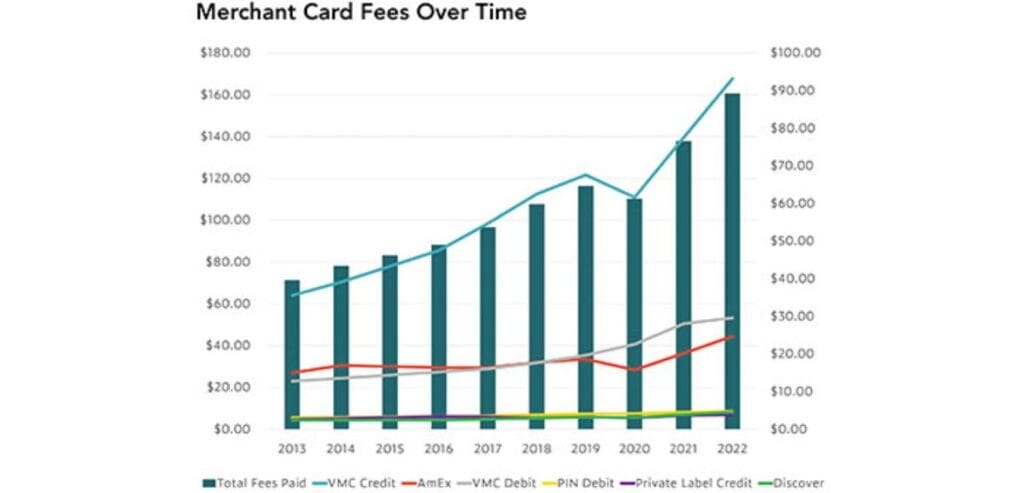
Visa and Mastercard run payment card systems for credit card purchases and there are four main systems: card issuers, cardholders, merchants, and merchant acquirers (usually banks). Card issuers provide credit cards to consumers, and they use these cards to buy stuff from merchants. Merchants then use acquirers (often their banks) to handle card payments. Customers generally use a payment card at a store and the merchant sends card details to their acquiring bank. After that, the acquiring bank forwards info to the Visa or MasterCard network, where the network relays the information to the customer’s issuing bank. the issuing bank checks if the customer has enough funds or credit, and if all is good, then, the issuing bank approves the transaction. The approval usually goes back through the network to the acquiring bank, where the acquiring bank then notifies the merchant.
Subsequently, the issuing bank sends the payment to the acquiring bank, taking out an “interchange fee.” The Visa and MasterCard set it as a default fee if banks can’t agree on it. The acquiring bank pays the merchant, deducting a “merchant discount fee” that includes the interchange fee plus a processing charge, and these fees change based on some factors like the payment card type. The merchants who accept the Visa and MasterCard are required to stick to the network’s rules, which are usually the same for everyone.
To cover both interchange fees and transaction processing charges, the acquiring bank pays merchants and takes a “merchant discount fee”. This fee can change based on the payment card type. One important rule is the “honor-all-cards” policy, which means they have to accept all cards from a specific brand, no matter the different fees involved, and the Merchants using Visa and MasterCard are obligated to stick to those certain rules.
Due to rules like “no-surcharge” and “no-discount”, merchants can’t push customers to use specific payment methods, like cash or certain cards because these rules stop them from changing prices based on how customers pay, and as the interchange fee, originally seen as a bank service fee, shifts the costs between card issuers and merchants instead.
Antitrust Lawsuit Settlement of the Payment Card Interchange Fee Settlement Legal Case
The payment card interchange fee and merchant discount antitrust lawsuit began in 2005. Visa, Mastercard, and various banks were sued over alleged price fixing and anti-competitive practices by merchants and trade groups.
It was observed that since 2005, Credit card companies and merchants have been at odds over swipe fees. – In 2012, a whopping $7.25 billion settlement was reached by Visa and Mastercard with retailers over credit card fees. An appeal was overturned by the court regarding the settlement in 2014, citing issues for some retailers. Despite some attempts to revive it, they were ultimately shot down by a federal appeals court in 2016 and the U.S. Supreme Court in 2017. In 2018, they settled again for $6.2 billion regarding card fees.
Subsequently, a settlement of $5.54 billion was approved by U.S. District Court Judge Margo K. Brodie in February 2019 and after a long four years of legal battles, the Court of Appeals confirmed the settlement in March 2023, making some adjustments to service awards and allowing claims to progress.
The United States Court of Appeals for the Second Circuit unanimously confirmed the district court’s final approval of a historic $5.5 billion payment card interchange fee settlement under the Sherman Act, on March 15, 2023. It was allegedly said to be the largest private antitrust settlement in its 130-year of history. The initial deal was the biggest all-cash antitrust settlement in U.S. history. However, its value dropped to $5.5 billion after around 8,000 retailers opted out. And big names like Target, Starbucks, Foot Locker, and Crate & Barrel chose to go after their lawsuits. And on account of that the settlement was reduced from the original $5.6 billion.
This settlement resolves claims in the In re Payment Card Interchange Fee and Merchant Discount Antitrust Litigation, alleging that Visa, Mastercard, and their member banks charged excessively high fees on credit and debit card transactions, violating antitrust laws.
In December 2023, claim forms were sent out to millions of business owners who accepted Visa and Mastercard from January 1, 2004, to January 25, 2019, it was also determined that the original claims period was extended from May 31 to August 30, 2024. However, it’s now been further pushed back to February 4, 2025.
Ongoing Legal Dispute
On September 24, 2024, the United States Department of Justice filed an antitrust, civil enforcement lawsuit against Visa, charging that the credit card company had anticompetitive, antitrust violations of the Sherman Act by monopolizing markets for debit networks. In March 2024, the settlement served to mitigate swipe fees for United States merchants in order to cut down on the fees and save retailers some $30 billion over the next five years; as part of that settlement, Visa and another issuer of credit cards have agreed to reduce processing fees by at least four basis points for the next three years and maintain that lower rate for a five-year total.
The deal required the reduction of fees to be at least seven basis points lower than the current average, with an independent auditor checking this compliance. Also, On June 25, 2024, the U.S. District Court for the Eastern District of New York didn’t give preliminary approval. The Visa’s CEO mentioned they’re looking for a new settlement, which might happen around trial time.
Claims by Plaintiffs
Plaintiff’s argument goes along with an assertion that Visa, Mastercard, and other major credit card-issuing companies have collaborated in boosting the so-called interchange fees (swipe charges) to a grossly unfair level vis-vis merchant. Similarly, these companies are accused of discriminating against merchants who wish to highlight economical modes of payment such as low-cost cards, cash, and checks.
Settlement of the case

On November 27, 2012, Judge John Gleeson from the U.S. District Court gave preliminary approval to a proposed settlement. He noted that while there are issues to be looked into, they aren’t serious enough to block approval. This approval was considered to be a big deal because it opened the door for over 7 million potential class members to decide if they wanted to be part of the settlement or not.
Starting around mid-2013 the settlement will cut swipe fees for merchants by 0.1% for eight months. The total settlement value is estimated at $7.25 billion but could be lower if more plaintiffs opt-out. It was also determined that by the start of January 27, 2013, merchants could charge customers fees for credit card payments to cover swipe fees. This didn’t however impact the debit cards or states that banned credit card surcharges. Major retailers like Wal-Mart and Target chose not to add these surcharges, and if a purchase was returned, the surcharge was refunded with the product price. On the other hand, The National Association of Convenience Stores criticized the surcharge measure, saying it just turns retailers into bank collectors. On top of that, The National Retail Federation also argued that the real issue is hidden fees from card companies and emphasized the need for transparency and competition.
Following that, opponents were concerned about the parts of the settlement that blocked future lawsuits. Merchants were unable to back out from some significant elements of the deal.
Stephen Neuwirth, a Home Depot lawyer, argued that Visa and MasterCard offered a big payout due to the way the deal was structured. It was considered that merchants were being forced into a bad deal without the option to say no.
Appeal
In the due course, Judge Gleeson gave preliminary approval to a settlement, in November 2012, but some plaintiffs quickly appealed to invalidate it. The plaintiffs claimed that their rights were violated because they couldn’t back out from certain provisions, particularly from the litigation that was released to prevent future lawsuits. A plaintiffs’ lawyer, Jeff Shinder, further emphasized that the settlement infringed on the due process rights of many merchants by not allowing them to withdraw from certain provisions.
In January 2013, the Second Circuit Court ruled that appeals against the settlement wouldn’t be heard until objections were filed and reviewed by the trial court in September 2013. Subsequently, this ruling allowed settlement notices to be sent to eligible merchants despite the ongoing objections. And, by June 2016, the Second Circuit Court overturned the settlement, stating that class counsel failed to adequately represent the interests of all merchants involved, particularly those focused on monetary relief versus injunctive relief.
Legal Fees Relating to the Case

The legal fee was decided by three law firms involving Robins, Kaplan, Miller & Ciresi; Berger Montague; and Robbins Geller Rudman & Dowd LLP, which requested $720 million for their work on a case. And if it is granted, then it would be one of the largest legal fees awarded in U.S. history.
The requested amount is concluded to be approximately 4.5 times the typical hourly billing rate for such work. Thus, approval of these fees is contingent on the settlement being approved. It was justified by the firms that the high fee settlement amount, was required due to the risks, and complexity of the case. Any awarded fees will be divided among around 40 different law firms. However, the lead counsel typically decides how the fees are distributed.
Appointment of an independent expert
A settlement aimed to reduce interchange fees for merchants and shield credit card companies from future lawsuits was approved by the U.S. District Court Judge John Gleeson approved a settlement of $7.25 billion, in December 2013, even though the initial settlement was later reversed with a new settlement of $6.24 billion which was considered by the court on November 7, 2019.
Regarding that, Judge Gleeson appointed Alan Sykes who was a professor at NYU with a strong background in economics and trade, having taught at Stanford and the University of Chicago as an independent expert to assist in evaluating the proposed settlement. His appointment was unopposed by any parties involved, which is uncommon as judges typically don’t appoint independent experts.
What Are the Important Points Noted on the Visa/MasterCard Settlement?
At another juncture, the U.S. District Court for the Eastern District of New York settled a case for the upward of 5.6 billion dollars after almost 15 years of legal battles. – The lead plaintiffs received 900,000 dollars in service awards and over 523 million in legal fees. – Some appellants expressed their disagreement with the settlement, claiming issues with class certification, approval, service awards, and attorney fees.
These include:
- A minimum reduction of at least 4 basis points on fees to be maintained for three years.
- On or below the December 31, 2023 levels, these fees will be frozen for five years.
- On average system-wide, a minimum reduction of at least seven basis points below the current average over five years.
- The removal of any prohibitions limiting merchants to notify customers of lower-cost payment alternatives is recognized as necessary.
- That competitive pricing practices are promoted.
Robins Kaplan is the co-lead counsel for a joint group of retailers accepting credit cards from Visa and MasterCard, and the present consolidated case was started over 18 years ago based on accusations that the interchange fee system is anti-competitive.
In addition to the above, Visa and MasterCard are positioned in a lawsuit along with major card issuers like Bank of America, JPMorgan Chase, Wells Fargo, Capital One, and Citibank. In 2012, they achieved a great settlement but afterward overturned on appeal.
Conclusion
The Payment Card Interchange Fee Legal Case is a significant moment in the battle between merchants and credit card companies over swipe fees. with a $5.5 billion settlement confirmed by the U.S. Court of Appeals for the Second Circuit, marking it the largest private antitrust settlement in U.S. history. The case addresses the claims that Visa, Mastercard, and their member banks charged excessively high fees on card transactions so, this settlement aimed to lower the swipe fees, freeze them for a certain period, and remove restrictions on directing customers to cheaper payment methods. Some major retailers chose to withdraw rather than pursue their legal actions, but the settlement sets a precedent for fairer practices in the payment card industry. Overall, it promotes competition and transparency, benefiting both merchants and consumers.
There has been notable progress in addressing some of the concerns related to interchange fees due to the legal case relating to the payment card interchange fees, which highlighted the challenges in balancing the needs of merchants, consumers, and financial institutions.
However, the discussion about interchange fees is still active and ongoing, and the payment landscape is constantly changing, which will influence future legal and regulatory actions. It can be guaranteed that these developments will play a crucial role in shaping the future of global commerce.