
Over the years the CBD industry has been booming as more people are becoming aware of the health and therapeutic benefits of their non-psychoactive compound. But still, CBD businesses are struggling to find banks that are willing to process their payments.
What Is CBD?
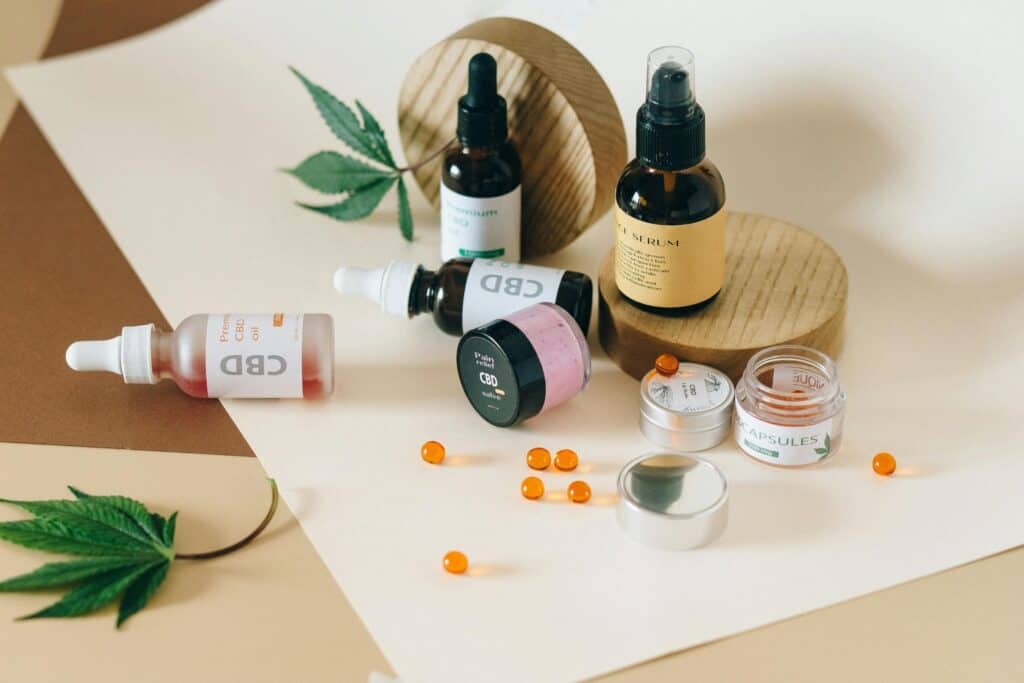
Cannabidiol, also known as CBD, is a natural substance gaining popularity for its various health and therapeutic benefits. CBD is generally found in certain products, such as tinctures, gummies, oils, and topical items like balms and lotions, and unlike THC (tetrahydrocannabinol), CBD doesn’t get a person high, this is because it’s a non-psychotropic compound. Plants like hemp and marijuana are mostly used to extract CBD, but the more common source is hemp.
What Is A CBD Merchant Account?
The CBD merchant account is considered a special type of high-risk bank account. Which is set up by Merchant Service Providers (MSPs). This type of account allows businesses to accept credit and debit card payments along with ACH transfers, and digital wallets for any CBD products and after the payments and fees are taken out, the remaining funds go to the CBD merchant’s business bank account. Merchant service providers that usually work with CBD companies are aware of the risks that they face, they know how to handle these riskier transactions effectively.
The CBD industry is generally considered a high-risk business due to its complex legal landscape. The products of CBD are in high demand, especially in the health, wellness, and skincare markets. And for that, a reliable payment solution is needed.
Many merchants have the probability of getting accounts with shady processors, which leads to the getting risky disruptions and penalties. Fortunately, there are high-risk institutions that are ready to support CBD businesses with stable processing accounts.
The Need for High-risk Payment Processors In A CBD Business
In most of the U.S. states, CBD is legal. However, it is still a high-risk industry due to its unclear regulations. Being prepared is important as it helps in avoiding financial issues and will ultimately lead to success in the CBD stores. CBD products generally face strict regulations, which becomes a problem because it affects finding payment processors who are willing to help. The main solution is to track down a high-risk payment processor that can help in setting up a gateway to keep the business running smoothly.
Traditional credit card processors usually avoid CBD merchants due to the high-risk classification of the industry. Due to the connection between cannabis with CBDs, it raises concerns and questions, especially since CBD can also contain THC (tetrahydrocannabinol). If a product has THC levels above the legal limit, it can lead to issues for both the merchant and the payment provider. The reputational risk that comes with CBD makes it less appealing for many acquiring institutions.
In certain circumstances, merchants often use misleading marketing tactics, leading to unhappy customers and high chargeback rates and these create hesitance among payment processors to work with the CBD industry. Due to the fluctuation of the location and inconsistency of the regulations, it is quite tough for underwriters to have approval in the merchant accounts. The credit card processors must ensure that merchants follow all necessary regulations. And if the underwriters miss any red flags during onboarding it can lead to severe penalties.
CBD credit card processing accounts need more scrutiny from underwriters compared to regular low-risk accounts and they require extra documentation like a certificate of analysis and proof of compliance with laws. Also, Underwriters dive deep into the business model for a thorough review.
Addressing Banks’ Risk Concerns
There’s been some confusion for banks about working with CBD businesses due to unclear federal guidelines. Many banks are still uncertain and hesitant to engage with the hemp-derived CBD market and are worried about compliance issues because the FDA hasn’t set clear rules for these products even though plants like hemp and CBD products with less than 0.3% THC were legalized by the 2018 U.S. Farm Bill.
Moreover, the DEA and FinCEN declared that CBD is still a Schedule I substance due to its similarity to THC. Even if this went against the hemp rules in the Farm Bill. With, these conflicting messages from federal agencies, created legal confusion for banks. And, as a result, banks are hesitant to work with CBD businesses.
CBD companies can get specific insurance policies for product liability, inventory loss, and business interruptions to reduce risks with banks. Having a solid compliance program makes it easier for them to go through the underwriting process.
Overview And Compliance Of The CBD Oil Industry
Companies are required to show that they’re on top of things to obtain a CBD merchant account. It is also mandatory to follow the law and to compile documents proving the fact that the products have less than 0.3% THC on them. It is very much obligated for the companies to provide a testing certificate from a DEA that is registered by the lab for each product batch.
There are also certain processes and responsibilities merchants should follow like; setting up proper age-verification processes. And only sell CBD in states where it’s legal. Along with following FinCEN guidelines to establish anti-fraud and anti-money laundering policies. By, following such commitments, reassures the banks about ethical business operations.
If annual sales go over $1,000, the merchant must register with FinCEN as a money services business for extra regulatory credibility.
The 2018 Farm Bill in the United States has made it legal to cultivate and sell hemp-derived CBD products with less than 0.3% THC. CBD businesses were allowed to get merchant accounts but needed to follow certain rules. The payment processing is still tricky for CBD sellers even with federal green lights, state laws, and international regulations.
Merchants who sell CBD-based products are required to get a Certificate of Analysis (COA). The Certificate of Analysis shows the product’s cannabinoid profile and THC percentage which ensures that the product meets safety and quality standards, and, without reviewing the COA the payment processors won’t approve the accounts of the CBD merchants. Now there is a requirement from the banks and processors for the COA to confirm compliance with the laws and the THC limits.
Submitting a valid Certificate of Analysis (COA) boosts credibility for getting approved by payment processors. COAs are now crucial not just for processors but also for customers; hence, many CBD oil brands showcase them prominently online. The Farm Bill is a win for the CBD and hemp industry, but individual states have their own rules to follow for example in some states they may ban certain CBD products or require extra licensing which makes it tough for credit card companies to ensure that the CBD merchants are compliant with their rules and regulations.
Moreover, not adhering to federal or state laws can lead to rejected applications along with legal troubles. Along with that, merchants need to be well-informed about shipping restrictions for CBD products and advertising rules in different states and countries.
Benefits Of Better CBD Merchant Accounts
It is very complex to understand the payment processing for high-risk merchants who are related to certain sectors like; CBD, hemp, cigars, tobacco, and nicotine pouches. These industries are highly regulated and the payment processors are required to grasp and implement specific processing requirements accurately.
CBD merchants can process credit card transactions for various products like oils, edibles, and topicals and also include gummies, beverages, cookies, brownies, balms, pet oils, face creams, and tinctures, among others. CBD oil merchants in North America, the EU, and the UK also get the offer to be supported by a global partner provider. Now, CBD oil merchants are leveraging various e-commerce platforms and shopping carts for their innovative sales strategies.
Securing A CBD Merchant Account
Getting merchant account approval for CBD businesses can be tough, there are many processes through which a CBD merchant can get their account approved
Firstly, by starting the selling of non-ingestible products like topical as they’re less risky. Then by starting as a sole proprietor LLC, and shifting to an S-Corp or C-Corp for financial stability to grow. Subsequently, by being the owner and applying personally as the individual credit matters more than a new business. Eventually, through chatting with the underwriter over the phone to explain the compliance measures and then checking with processors for reasons behind previous declines and fixing those issues. Looking into private capital funding to cover startup costs without needing merchant services is another tip and also through considering other payment options like cash, checks, or cryptocurrency while you’re getting set up.
Henceforward, with some patience and creative solutions, CBD companies can secure the merchant accounts that they need without any hassle.
Retaining Merchant Account Services
Once the CBD merchant account is approved, then it is upon the CBD merchants to stick to regulations and procedures to keep their processing privileges. It’s essential to have solid product testing and inventory management in place, and a quick resolution of customer disputes is key to protecting the business’s reputation. By, staying updated on changing laws, the CBD merchant gets the capability to be ready and to comply with any FDA rules that come out.
Moreover, informing the payment processor about any major changes like new products or website updates is essential. It is also important for a CBD merchant to build strong relationships with banks. This can be achieved by keeping the communication open and transparent, making timely payments, and showing how the business is helping the community.
Following regulations closely ensures that the CBD merchant account remains healthy over time.
What Are The Requirements To Get A CBD Merchant Account?
Certain documents are required for someone to get a CBD Merchant Account-
- Government-issued photo ID
- Signed merchant application
- Voided check or bank letter
- Three months of bank statements
- Three months of processing statements
- Up-to-date certificate of analysis (COA) for CBD products
- List of suppliers for CBD products
KYC Documents Required For CBD Merchant Account
When applying for a CBD merchant account, it is required to submit both business and personal documents.
The required KYC documents generally include: –
- Merchant Account Application Form along with the details about the business, ownership, sales forecasts, and traffic data.
- Business License that covers the certificate of incorporation and articles of association based on the company structure.
- Certificate of Analysis (COA) which shows THC percentage, and contaminants, and includes details like product name, batch number, analysis date, and lab information.
- Domain Ownership Proof which is a copy of domain purchase receipts showing the administrator’s name and lastly
- Payment processor requirements typically include -Photo ID, address proof, and bank details.
Conclusion
The CBD sector is becoming more accessible for legal and reputable businesses to obtain merchant account processing. If CBD merchants focus on compliance, specialized payment processors, and addressing banks’ concerns, they are more likely to succeed, and along with the right strategies, CBD companies can handle regulatory challenges for online and in-store payments.
By following best practices, merchants contribute to the industry’s legitimacy and future growth. Embracing these strategies helps secure financial infrastructure and fosters continued expansion.