By Alex Knight August 2, 2025
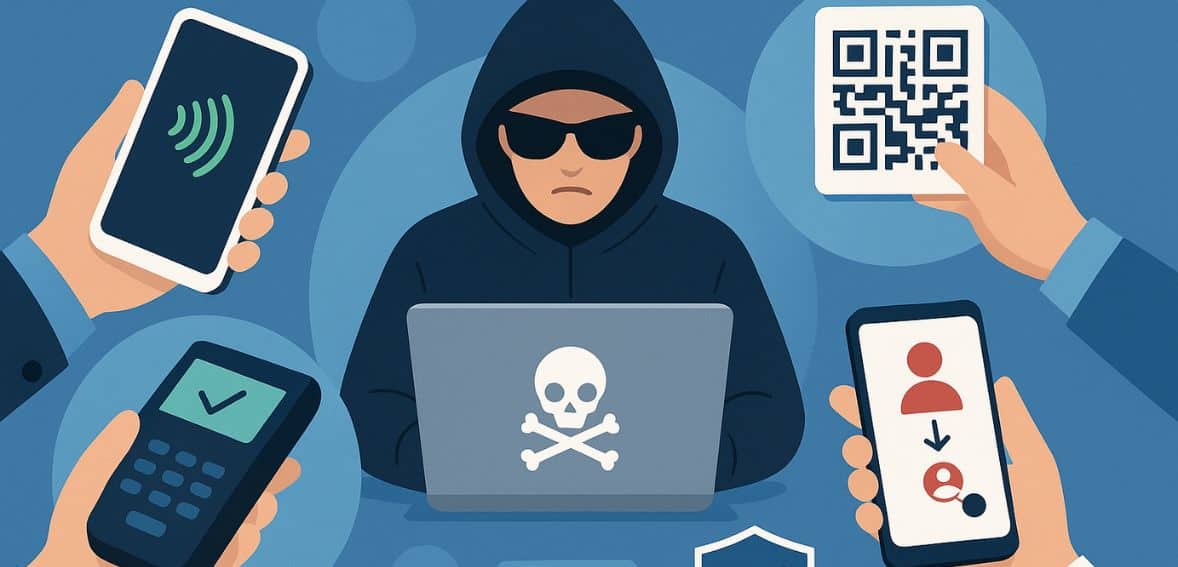
In recent years, there has been a rapid evolution in the way people pay. Peer-to-peer (P2P) apps, contactless cards, and QR code-based systems are replacing physical cards and paper money. Payment has never been simpler or quicker, whether you’re using a mobile app to transfer rent or a simple tap on your phone to get coffee.
However, as convenience increases, so does the sophistication of scammers, who exploit of weaknesses in new systems. Additionally, the risk of invisible theft or manipulation increases with every tap, scan, or send. One concerning question raised by the growth of digital-first payments is whether consumers and businesses are ready for the new vulnerabilities these channels present.
The Speed of Innovation Meets the Slowness of Regulation

Regulations and fraud prevention technologies cannot keep pace with the rapid development of the race to develop frictionless payment options. P2P payment systems, contactless cards, and QR codes make things easier, but they also invite new kinds of fraud that are hard to stop—highlighting why adopting mobile payments securely is crucial for businesses. When everything happens in milliseconds and involves multiple platforms, what once worked—such as card EMV chip readers or simple tokenization—might not be enough.
Contactless Payments: Convenience with a Caveat
It feels magical to tap a phone or card to a reader, but fraudsters can easily take advantage of this. This very ease is now the target of contactless skimming devices, relay attacks, and device spoofing. Criminals are able to create terminals or intercept data.
Chargebacks and disputes are more likely to occur for merchants who do not use layered security. Frequently, the fraud goes unnoticed by consumers for days. If the proper precautions are not taken, the same technology that facilitates speedy tap-and-go transactions can also facilitate silent thefts.
QR Code Scams: A Digital Sticker with Real Risks

The widespread use of QR codes in pop-up shops, restaurants, and retail creates a whole new attack surface. Malicious codes are simple for fraudsters to overlay or replace with authentic ones. Customers may be giving sensitive information or making illegal payments when they scan what appears to be a menu or a pay-now prompt.
QR fraud depends on trust in the real world, as opposed to phishing emails, which require clicking on suspicious links. Also, victims frequently aren’t aware of the scam until the money has been taken.
Peer-to-Peer Transfers: Casual Yet Risky
Casual payments are now commonly associated with apps such as Venmo, Zelle, and Cash App. It takes a few taps to pay your dog walker, split lunch, or reimburse a friend for concert tickets. However, fraud quickly followed. These platforms transfer money almost instantly and make it difficult or impossible to reverse fraudulent payments because they frequently prioritize speed over security.
Account takeovers, impersonation fraud, and fraudulent buyers on marketplaces are examples of scams. The platform now faces the same risks—and increasing scrutiny—even though it doesn’t plan to be a bank.
What’s Actually Working Against Payment Fraud

The industry is coming up with smarter solutions in response to each new digital payment method. AI and machine learning-powered real-time fraud detection is rapidly becoming essential. In milliseconds, these systems track transaction patterns and highlight anomalies that might indicate fraud.
Mobile wallets use biometric authentication as an extra layer of security, such as fingerprint or facial recognition. Sensitive bank or card information is now converted into one-time-use codes through improved tokenization.
Role of Consumer Education and Merchant Transparency
Technology alone isn’t enough. Users and merchants must be educated about safe practices. Consumers need to be wary of scanning unknown QR codes or sending money without double-checking usernames. Merchants should audit their terminals and printed materials regularly to prevent physical QR fraud. When both sides understand their roles, fraud attempts decrease and trust increases. It’s not about creating fear, but awareness.
The Future of Secure Payments: A Balanced Approach
Maintaining quick and simple payments without compromising security is crucial for the future. Fintech companies, payment networks, and central banks are all creating security layers that seamlessly integrate with user interfaces. The use of velocity checks, geotagging, behavioral analytics, and multi-factor authentication is growing in popularity. Integrating these tools to reduce fraud silently without increasing friction is crucial.
Collaborative Defense: Why Businesses Must Partner Up

Fraud cannot be solved by a business or tech provider acting alone. Working together is crucial. To react to fraud trends in real time, banks, security companies, regulatory agencies, and payment processors must coordinate. Blacklists, fraud intelligence networks, and shared databases are becoming essential resources. Each participant’s ability to identify fraud early improves with increased sector-to-sector sharing.
Where Vigilance Becomes Value
At the heart of this issue is a simple truth: the speed of convenience must match the speed of caution. As new payment technologies continue to shape consumer behavior, so must the commitment to securing them. For small businesses, this means choosing payment partners who prioritize security, training teams to recognize fraud attempts, and staying informed about evolving tactics. For consumers, it’s about embracing technology without becoming complacent. We all have a role to play.
Integrating Fraud Detection Tools Without Disrupting UX
How to implement security checks without offending users is one of the main problems facing businesses. To send a simple payment or scan a code for coffee, nobody wants to go through a dozen steps. However, fraud is encouraged when transactions are left open-ended.
The smartest businesses are integrating security features into the background, employing tokenization, device fingerprinting, and behavioral analytics in ways that users hardly notice, while also focusing on tools to prevent failed payments that could disrupt user experience.
For example, AI can identify a failed QR payment without requiring user input if it is made on a device that has never interacted with it before. A safer payment ecosystem, fewer false declines, and more seamless checkouts are all results of this type of silent security. It is about more intelligent, flexible, and forward-thinking design, not about adding steps.
The Evolving Role of AI in Real-Time Fraud Prevention
These days, artificial intelligence powers more than just product recommendations. It is actively influencing the way fraud is stopped before harm is done. AI can instantly analyze hundreds of data points per transaction in P2P and contactless systems, where speed is crucial. Does the IP address remain constant? Is the transaction behavior consistent with past trends? Has the user’s biometric verification just stopped working?
Once taking hours to process, these questions now only take milliseconds. The good news is that as machine learning processes more fraud scenarios, it keeps getting better. In addition to identifying today’s scams, companies that use these systems are getting ready for tomorrow’s fraud playbooks. However, human oversight and ongoing system training are still required to stay ahead of the curve; it’s not a plug-and-play solution.
Global Fraud Trends That May Influence Local Policies
Fraud is beyond national boundaries. Asian-inspired contactless skimming techniques are now being used in American transit networks. Parking meters in urban North America are now the target of QR code replacement scams, which originated in South America. Businesses and regulators must learn from international case studies as mobile payments and cross-border commerce grow in popularity.
For example, biometric validation is required in a number of EU nations for P2P transfers that surpass a certain threshold. Blockchain-based QR code security is being tested in a few Australian cities. Although the U.S. may not yet require these concepts, the trends point to a more globalized fraud environment. When local regulations catch up, companies that proactively follow global best practices will probably adjust more quickly.
Consumer Habits That Make or Break Fraud Defense
It’s easy to blame the scammer, but customer behavior frequently has a greater impact than expected. Many people still don’t turn on mobile alerts for contactless payments, so they don’t know about illegal taps until days later. Users often scan QR codes without verifying the legitimacy of the business or the URL. Surprisingly, many users of peer-to-peer apps share credentials or reuse passwords across platforms, treating them like personal Venmo piggy banks.
Companies need to address these behaviors by educating people rather than criticizing them. Closing the knowledge gap can be greatly aided by brief tutorials, email tips, or clear instructions at the point of payment. Customers are less likely to fall into traps and are more likely to believe that the platform is protecting them when they feel informed and empowered.
Conclusion
The rise of P2P, contactless, and QR transactions was never going to be smooth. There is always a risk associated with convenience. However, progress, not panic, is the key to navigating this new payment landscape. Both small and large businesses may fight fraudsters by implementing smarter technology, highlighting real-time data analysis, training users, and embracing a collaborative defense mindset.
The strategies used to fight fraud will always change along with it. Businesses that view security as a customer loyalty strategy as well as a technology investment will prosper in 2025 and beyond. Because trust must be established quickly in a time when payments are made in a matter of seconds.